
Just wanted to throw away his skis – then he turned everything upside down

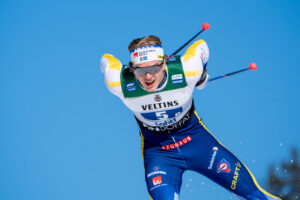
In December, he wanted nothing more than to throw both skis and poles on the bonfire. Instead, he flipped his entire training approach upside down. Then it all clicked: now he’s heading out to chase Klæbo.
Last year, he swapped his entire ski fleet just before the World Championships. This year, he’s turned his whole training philosophy around – right before the Olympics. And the results have been remarkable.
Now, the 26-year-old Frenchman enters the buildup to his first Olympic Games with a solid dose of confidence.
“I’ve never been better, and I’m just excited to get the season started,” Jules Chappaz tells Langrenn.com.
Also Read – Changing ski brands: Must test 40-50 pairs of skis
Fed up
But it was far from certain Chappaz would be where he is now. The season opener in Ruka last year was a disappointment, and Lillehammer was even worse.
“The season started absolutely terribly. I couldn’t get past the prologues, and nothing worked,” Chappaz explains.
During the 20km race at the Davos World Cup round before Christmas, Chappaz had had enough. He pulled out mid-race and went home, frustrated and without answers.
Chappaz withdrew from all competitions, including the Tour de Ski. And the World Championships in Trondheim – his main goal ever since he won bronze in the sprint at the 2023 Worlds in Planica – didn’t even cross his mind.
“I was sick of it, and I didn’t want to compete anymore,” he admits.
The story continues below.

Had to care less
Chappaz realized he had to do something radical. The solution was to care less about training, spend more time with his girlfriend, and focus on what made him happy.
“I dropped all the hard sessions and competitions. Over Christmas, I was just at home, training easy and only doing what I felt like,” says Chappaz, who comes from La Clusaz, near Mont Blanc.
He continued working on it for several weeks.
“I had to rediscover the joy. However, the desire to train in intense sessions eventually returned. And when the World Cup came to Les Rousses at the end of January, I was ready. I felt like I’d got my competitive spark back,” says Chappaz.
The turning point
The home World Cup round was a breakthrough. He reached the sprint semifinals for the first time in over a year. In the team sprint the following week, he finished in second place. And in Falun, the last World Cup before the Trondheim World Championships, he took fourth – his second-best individual World Cup finish – and secured a spot on the World Championship team.
There, he placed fourth in the sprint, just two-tenths of a second from a medal. The post-Worlds World Cups were a streak of success: Chappaz made the podium in every race, with two second places and one third.
“I’m very satisfied with the second half of the season,” he says.
Never again: training radically changed
The measures he took after the disastrous start and December collapse gave Chappaz a real wake-up call. Another season start like that isn’t an option this year – mentally or athletically – especially with Olympic selection depending on early-season results. He’s acted accordingly.
This spring, Chappaz decided to fully commit to the training philosophy that had worked the previous winter: spending more time with his girlfriend, taking more rest days, and caring less.
One change was simplifying his entire training plan. A flat, simple model has replaced complex periodization with varying weekly loads and focuses.
“Every week is basically the same. I normally train 20 to 24 hours, with two or three intensity sessions. And I take at least one full rest day every 14 days. That’s a lot more than before,” says Chappaz.
The change has already paid off.
“Now I have better balance in life, and everything works much better. I’ve had my best summer of training yet, with more total hours, higher-intensity work, and better quality in every session. I’m fresher both physically and mentally,” he says.
Chasing Klæbo
Last year, he replaced his entire ski fleet. This year, he has replaced his entire training system. Now Jules Chappaz is aiming higher than ever: an Olympic medal in 2026.
“I was on the podium several times last winter, and I was extremely close to a medal at Worlds. So, I know I’m right up there.”
Johannes Høsflot Klæbo won six gold medals out of six possible at the World Championships. Can anyone beat him at the Olympics?
“Good question. I’ve never beaten him before. However, they say cross-country skiers typically reach their peak between 26 and 30 years old. Now I’m 26, so I hope I’m entering my golden years.”
The 2026 Olympics will be held in Italy from February 6 to 22. The cross-country races will take place in Val di Fiemme.
Also Read: Program for cross-country skiing at the Milano-Cortina 2026 Winter Olympics
Are you interested in traditional cross-country skiing? Click HERE and read more about it.
Subscribe to our newsletter
Most read
-
16.08.2023
-
03.02.2026
-
22.07.2023
-
29.06.2023
-
02.12.2023



More Articles
-
Team Futura GTE Trentino – Pro Team presentation Season XVII
Team Futura GTE Trentino is an Italian Pro Team with a long and proud history spanning more than four decades. Based in the iconic Val di Fiemme region, the team represents both tradition and progress, combining its deep local roots with an increasingly international outlook.16.01.2026